Bridges
Missing one or more teeth can affect far more than the way you look in photos. It can change how you chew, how clearly you speak, and how confidently you smile. Over time, the gap left behind also allows neighboring teeth to shift, which can throw off your bite and lead to further dental problems. If you have lost a tooth, or several, a dental bridge is one of the most reliable ways to close that gap and get back to eating, talking, and laughing without a second thought.
At Porche Dental Care, our team helps patients throughout Houma restore missing teeth with high-quality dental bridges tailored to their needs. Dr. Corey Porche is a Houma native who has practiced dentistry for over 20 years, including nearly a decade as owner of this family and cosmetic practice. Our office pairs modern technology, including same-day CEREC crowns and 3D printing, with a warm, welcoming approach so every visit feels personal from start to finish.
What Is a Dental Bridge?
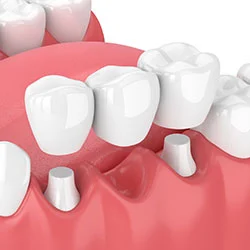
A dental bridge is a fixed restoration that replaces one or more missing teeth by anchoring an artificial tooth, called a pontic, to the healthy teeth on either side of the gap. The anchor teeth are shaped and fitted with custom crowns, and the pontic sits between them to fill the empty space. Once cemented in place, the bridge works much like natural teeth, letting you chew, speak, and smile with confidence.
Bridges are a great choice for patients who want a permanent, non-removable option that looks and feels close to the real thing. According to the CDC, tooth loss is largely preventable, but about 1 in 10 adults aged 65 to 74 have lost all their teeth, and many more are missing just a few. For those patients, restorative solutions like bridges play an important role in day-to-day quality of life and long-term oral health.
Types of Dental Bridges Available
Different situations call for different types of bridges, and our team helps you find the option that fits your smile, your goals, and your budget. Traditional bridges are the most common choice and use crowns on the neighboring teeth to hold the replacement tooth in place. Cantilever bridges are similar but only anchor to one side, which can be useful in certain locations of the mouth where only one supporting tooth is available.
Maryland bridges use a metal or porcelain framework bonded to the back of adjacent teeth, which keeps the natural teeth largely intact. When the surrounding teeth are not strong enough to serve as anchors, an implant-supported bridge may be a better fit. In those cases, dental implants act as the foundation, providing added stability and helping to preserve the jawbone over time.
Benefits of Choosing a Dental Bridge
Dental bridges do more than fill a space in your smile. They help restore proper chewing function so you can enjoy the foods you love, and they support clearer speech by keeping your tongue and lips positioned correctly. Bridges also prevent nearby teeth from drifting into the gap, which reduces the risk of bite problems, uneven wear, and further tooth loss down the road.
Closing that gap also offers a significant cosmetic benefit. A well-crafted bridge blends in with your natural teeth in shape, size, and color, giving you a smile that looks whole again. For patients weighing options like dentures or single-tooth replacement, a bridge often provides the right balance of stability, appearance, and cost, especially when only a few teeth are missing.
Frequently Asked Questions About Dental Bridges
Deciding on a tooth replacement can feel like a big step, and it is normal to have questions along the way. Below are answers to some of the most common ones our patients ask.
How Long Do Dental Bridges Typically Last?
With good oral hygiene and regular checkups, most dental bridges last between 10 and 15 years, and many last even longer. Brushing twice a day, flossing carefully around the bridge, and keeping up with routine cleanings are the best ways to protect your investment.
Is the Bridge Placement Process Uncomfortable?
The procedure is very manageable for most patients. We use local anesthesia to keep the treatment area numb, and any mild soreness afterward usually fades within a few days. Our office focuses on gentle, personalized care so you feel comfortable through every step of the appointment.
How Do You Care for a Dental Bridge?
Caring for a bridge is similar to caring for your natural teeth, with one added step. Along with brushing and flossing, we recommend using a floss threader or interdental brush to clean underneath the pontic, where food and plaque can collect.
Will My Insurance Cover a Dental Bridge?
Many dental plans cover a portion of bridge treatment. While our practice is fee-for-service, we work with insurance and offer flexible financial options, including CareCredit, to help make treatment more affordable.
Close the Gap With Porche Dental Care
A missing tooth does not have to dictate how you feel about your smile or how you go about your day. At Porche Dental Care, we take the time to walk you through every option, answer your questions clearly, and design a treatment plan that fits both your mouth and your life. From detailed consultations to precise, technology-driven care, our team is committed to helping you feel confident in the results.
Dr. Porche has served the Houma community since 2016 and brings 20 years of dental experience to every case. Our team continues to invest in the latest tools and training so patients receive care that is both modern and personal. Learn more about what sets our practice apart, and when you are ready to take the next step toward a complete smile, schedule your consultation with our Houma dental office today.