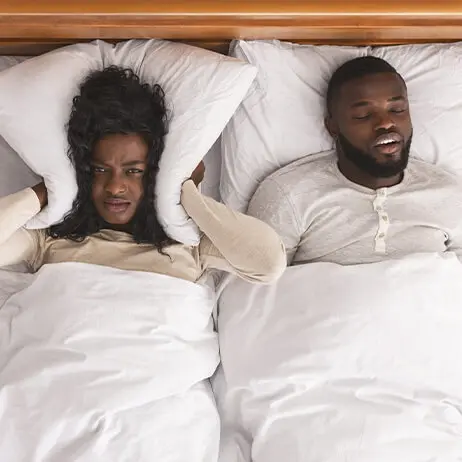
Snoring Prevention Houma, LA
Snoring is one of the most common sleep complaints in the country, and for many people it is more than just a nighttime nuisance. Chronic snoring disrupts the quality of rest for the person snoring and for anyone else in the home, and in some cases it signals an underlying condition — obstructive sleep apnea — that carries real health consequences if left unaddressed. The good news is that dentistry offers an effective, comfortable, non-invasive solution for many snorers: a custom-fit oral appliance worn during sleep. According to the Sleep Foundation, mandibular advancement devices have an 80 percent compliance rate among users, making them one of the most practical and consistently used treatments for snoring and mild-to-moderate sleep-disordered breathing.
At Porche Dental Care in Houma, Louisiana, Dr. Corey Porche evaluates patients for snoring-related concerns and fits custom oral appliances as part of our preventive care services for Terrebonne Parish patients. If you or someone in your household has been struggling with chronic snoring, schedule a consultation and Dr. Porche will assess whether a dental appliance is the right fit for your situation.
What Causes Snoring?
Snoring happens when the flow of air through the mouth and throat is partially obstructed during sleep. As the muscles in the throat and tongue relax, the airway narrows, and the remaining space forces air through at higher velocity. That turbulent airflow causes the soft tissues in the throat — the soft palate, the uvula, and the back of the tongue — to vibrate, producing the snoring sound.
Several factors can make this more likely to occur or worsen its severity:
Snoring vs. Sleep Apnea
Not all snoring is the same. Simple or primary snoring is the vibration of soft tissues without a meaningful disruption in breathing. Obstructive sleep apnea (OSA), on the other hand, involves actual pauses in breathing during sleep — sometimes hundreds of times per night — where the airway becomes fully or significantly blocked. OSA is associated with increased risk of high blood pressure, cardiovascular disease, daytime fatigue, and metabolic issues.
The two conditions often share the same starting point, and loud or persistent snoring is one of the most common early signs of OSA. If you experience significant daytime sleepiness, wake up with headaches, or have been told you stop breathing during sleep, it is important to be evaluated by a physician for sleep apnea. Dr. Porche will discuss your symptoms at your consultation and coordinate with your medical provider if a sleep study or formal OSA diagnosis is warranted before fitting an appliance.
What Is a Mandibular Advancement Device?
A mandibular advancement device, or MAD, is a custom-fitted oral appliance that resembles a sports mouthguard or orthodontic retainer. It is worn only during sleep. The device gently holds the lower jaw (mandible) in a slightly forward position, which in turn keeps the tongue from falling backward and maintains a more open airway throughout the night. Some devices also include a tongue-retaining component to provide additional airway support.
Because the MAD works mechanically by repositioning the jaw rather than relying on medication or a machine, it is quiet, compact, and easy to use — a significant advantage over CPAP therapy for patients with mild-to-moderate snoring or sleep-disordered breathing who find CPAP difficult to tolerate.
What to Expect at Your Snoring Appliance Appointment
Is a Mandibular Advancement Device Comfortable?
Yes. A custom-fitted MAD from Porche Dental Care is made to match the exact contours of your teeth, making it far more comfortable than anything available over the counter. Most patients adapt to wearing the device within a few nights and sleep through the night without noticing it. The appliance does not prevent mouth breathing and can be used by patients who snore because of sinus congestion or allergies.
Some patients experience mild jaw stiffness in the first few mornings after starting to wear the device. This is normal and temporary — it resolves after removing the appliance and doing gentle jaw movements. If jaw soreness persists or you notice changes in your bite, contact our office so Dr. Porche can make a simple adjustment. Caring for the appliance is straightforward: rinse it daily, brush it gently with cool water, and store it in its case when not in use.
Frequently Asked Questions About Snoring Prevention
Can a dentist help with snoring?
Yes. Dentists trained in dental sleep medicine can fabricate custom mandibular advancement devices that reposition the jaw during sleep to keep the airway open. At Porche Dental Care, Dr. Porche evaluates patients for snoring-related concerns and fits oral appliances for qualifying patients in Houma and across Terrebonne Parish.
What is the difference between snoring and sleep apnea?
Snoring is the vibration of soft tissues as air passes through a narrowed airway. Sleep apnea involves actual pauses in breathing during sleep where the airway becomes fully or significantly blocked. Both can be helped by a mandibular advancement device, but sleep apnea requires a formal medical diagnosis before treatment. If you suspect you may have sleep apnea, Dr. Porche will discuss your symptoms and coordinate with your physician if a sleep study is indicated.
How long does a snoring appliance last?
Custom-fabricated oral appliances typically last three to five years with proper daily care. Dr. Porche checks the condition of your appliance at routine exams. If the device wears out, chips, or no longer fits correctly, a replacement can be fabricated from updated impressions.
Can I use a store-bought snoring device instead of a custom one?
Over-the-counter snoring devices are available but significantly less effective and less comfortable than custom-fitted appliances. Because they are not molded to your specific bite and jaw anatomy, they distribute pressure unevenly, tend to cause more jaw discomfort, and are less likely to hold the airway open consistently. A device from Porche Dental Care is made to fit exactly how your teeth and jaw are positioned.
Does a snoring appliance work for sleep apnea?
For mild-to-moderate obstructive sleep apnea, oral appliances can be an effective alternative for patients who cannot tolerate CPAP therapy. The Sleep Foundation notes that mandibular advancement devices have an 80 percent compliance rate, compared to about 40 percent for CPAP over the long term. However, CPAP remains the most effective therapy for moderate-to-severe OSA. A formal sleep study and physician evaluation determine which treatment pathway is appropriate.
Is the appliance covered by insurance?
Coverage varies by plan. Some medical insurance plans cover oral appliances when prescribed for diagnosed obstructive sleep apnea. Dental insurance typically does not cover snoring appliances. Because Porche Dental Care is a fee-for-service, out-of-network practice, we provide documentation to support any insurance claims. Our financial information page has details on out-of-network benefits and CareCredit financing options.